Garbage Man Jobs: Duties, Pay, and How to Get Hired in the USA

Linda Edwards
Guide rating 4.5 / 5
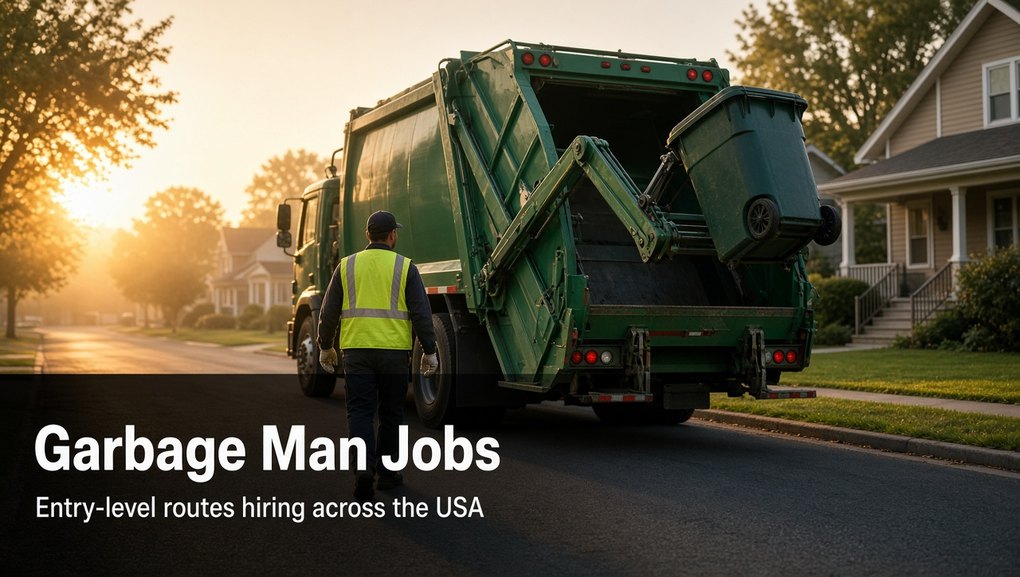
Garbage man jobs are some of the most direct entry points into steady, physical work in the United States. You ride a route, collect household or business waste, and finish a shift with a visible result: clean curbs and empty carts. This guide covers what the work involves, what employers ask for, what public listings actually advertise, and how to move from reading about garbage man employment to submitting an application.
It is written for adults who want hands-on work, people changing careers, and job seekers who would rather not spend months on a résumé. Every pay figure below comes from a named public source with a date, so you can check it yourself.
| Quick fact | What the source shows |
|---|---|
| Official job title | Refuse and Recyclable Material Collectors (O*NET code 53-7081.00) |
| Other titles in use | Garbage Man, Trash Collector, Refuse Collector, Sanitation Laborer, Swamper, Recycle Driver |
| National median pay (2025) | $23.89 an hour, $49,690 a year, per O*NET |
| U.S. employment (2025) | 156,400 workers, per O*NET |
| Typical starting point | No formal credential and less than one month of on-the-job training, per CareerOneStop |
Role Summary: what garbage man jobs involve
A garbage man job, in the language of the U.S. Department of Labor, means collecting refuse or recyclable materials from containers and dumping them into a truck. Some workers also drive the truck. That one line covers two very different positions, and knowing which one you are reading about is the first skill of a smart job search.
The first type is the helper or loader. On rear-load routes, a helper rides on the truck, steps off at each stop, empties cans or bags into the hopper, and climbs back on. O*NET even lists "Swamper" as a reported title for this kind of work. Garbage truck helper jobs are usually the roles where new workers start.
The second type is the driver-collector. Many cities and private haulers now run automated side-loaders, where one person drives and operates an arm that lifts the cart. Those positions usually require a commercial driver's license, which puts them outside true no-experience work.
Employers range from city sanitation departments to private hauling companies. CareerOneStop notes that most collectors work either in waste collection or for local government. Garbage pickup jobs exist in nearly every American town, because every town produces trash every week.
Key Responsibilities on a collection route
O*NET lists 14 tasks for this occupation. The ones below are the daily core, written in plain terms:
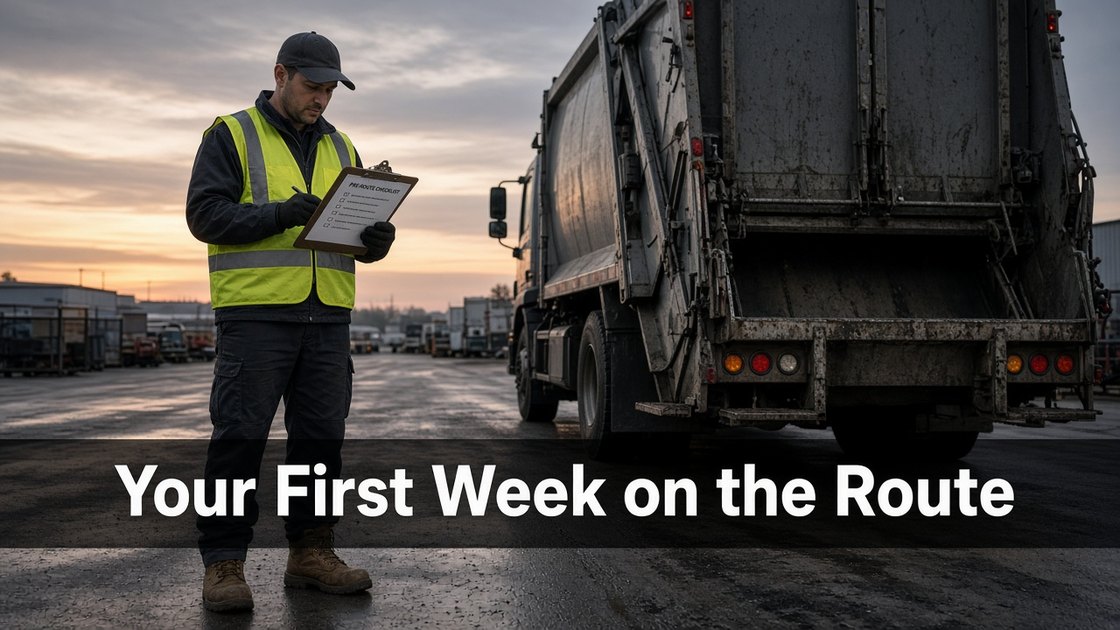
- Inspect the truck before the route starts so it is safe to operate.
- Follow an established route through residential streets, alleys, or business areas.
- Step down to collect garbage, then remount to ride to the next stop.
- Operate automated or semi-automated lifts that raise bins and empty them into the truck body.
- Run the compactor that presses collected refuse.
- Tag containers to tell customers about problems, such as excess trash or items that are not allowed.
- Talk with dispatchers about delays, unsafe sites, accidents, or breakdowns.
- Dump loads at disposal sites, and clean trucks or compactor bodies after the route.
- Fill out defective equipment reports and, on some crews, refuel trucks or add fluids.
- Make special pickups, such as food scraps, used oil, or old electronics.
A helper does most of the stepping, lifting, and tagging. A driver handles inspections, the route, the lift controls, and the radio. On small crews the lines blur, and a good hiring manager will tell you exactly which tasks belong to the opening.
Benefits & Perks: what to look for in the listing
Benefits belong to the employer, not the occupation, so the only reliable source is the listing itself. The Durham posting, for example, lists a fixed schedule of Monday through Thursday, 6:00 a.m. to 4:00 p.m., which is a four-day week. That is a real perk printed on a real listing, and it is not something you can assume for other cities.
When you read garbage jobs listings, look for these lines and note which ones are printed:
- Health, dental, or vision coverage
- Retirement plan or pension, which is common to check for in city jobs
- Paid holidays and paid time off
- Uniforms and protective gear supplied by the employer
- Paid CDL training or an apprentice track, like the San Antonio program named in its listing
If a perk is not printed, ask. Do not treat a recruiter's summary as a promise.
Salary Range: advertised pay, not a guarantee
National data first. O*NET reports a 2025 median of $23.89 an hour, or $49,690 a year, for refuse and recyclable material collectors. CareerOneStop shows annual wages of $33,590 at the 10th percentile, $39,080 at the 25th, $62,020 at the 75th, and $75,900 at the 90th.
| Source | Advertised or reported pay | Type |
|---|---|---|
| O*NET, national median, 2025 | $23.89 per hour / $49,690 per year | Government survey data |
| City of San Antonio listing, 2026 | $19.47 to $22.79 per hour | Advertised pay, CDL driver |
| City of Durham listing, 2026 | Hiring range $43,977 to $50,898 per year | Advertised pay, CDL collector |
| City of Hampton listing, 2026 | $43,411 to $78,138 per year | Advertised pay, CDL operator |
Every listing figure above is a CDL role. Helper pay is often lower, and many helper listings do not print a range at all. The Rivo Consulting signup page linked below does not print a wage for any role. Read the employer's own posting for the number that applies to you.
Physical Requirements of the work
O*NET is clear that this is a physical job. Its core work activities include general physical activity using the arms and legs, such as climbing, lifting, balancing, walking, and stooping, plus handling and moving objects. It also lists climbing ladders or vehicles as a detailed work activity.
Safety gear is part of the job, not an option. In O*NET's work-context survey, 99% of respondents said they wear common protective equipment, such as safety shoes, gloves, and glasses, every day.
CareerOneStop adds that work in this group often includes repetitive movement and heavy lifting, and that employers typically require the ability to lift a set weight. The exact weight is in each employer's listing. Ask about it, along with route length and how many stops a typical day includes.
Finding garbage man jobs near me
Listings rarely use one name. The same work may be posted as garbage collector jobs, trash collector jobs, trash man jobs, or a city "solid waste" title, and a company hiring garbage man crews may call the seat a helper or loader. Search every version.
Searching "garbage jobs near me" on a big job board mixes helper seats, CDL routes, and landfill roles into one list. A narrower approach works better:
- Check your city or county website for public works or sanitation openings. Municipal listings, like the three above, print pay and requirements in detail.
- Check the careers pages of private haulers that serve your street. Your trash bill names the company.
- Register with a local hiring service that tracks entry-level openings, so new garbage pickup jobs and similar work reach you instead of the other way around.
Building a garbage man career
If you are wondering how to become a garbage man who drives, the path most listings point to is helper first, then driver. San Antonio's listing names an apprentice program and a CDL training program as routes into its driver role. Durham's collector listing expects the person to serve as a backup driver. Once you hold a Class B license and a clean record, the higher-paying openings in the tables above come into reach.
O*NET projects slower than average growth, about 1% to 2% for 2025 to 2035, with 15,500 projected job openings listed for that period. Openings come mostly from people leaving or retiring, so routes keep hiring even without fast growth.
How to apply
The button below opens Rivo Consulting. On 14 October 2026, its page described a free signup: you share your name, email, and city or ZIP, and Rivo says it will reach out when entry-level work opens near you. It lists warehouse and packing, general labor, cleaning and facilities, and production line helpers, and says no experience is needed.
It is not a city sanitation application and it does not name a waste hauler. Treat it as a way to hear about nearby hourly openings, then read the employer's own listing before you accept anything.
Questions before you apply
Do garbage man jobs require a CDL?
Driving roles usually do. All three city listings in this guide asked for a Class B CDL. Helper and loader roles that never drive often do not.
How much do garbage men make?
O*NET reports a 2025 national median of $23.89 an hour. Advertised ranges on 2026 city listings ran from $19.47 an hour to $78,138 a year, all for CDL roles.
Is this page a job offer?
No. It is a guide. The button leads to a free signup for nearby entry-level work, not to a specific garbage man opening.
What hours do collectors work?
It depends on the employer. Durham's listing prints Monday through Thursday, 6:00 a.m. to 4:00 p.m. Other listings set their own shifts.
Garbage man employment rewards people who show up early, work safely, and like seeing a job finished. Start by deciding whether you want a helper seat now or a driver seat later, then read every listing for its license line, its pay line, and its lifting line before you apply.